Beta This website is in development — content and design are still changing
IAMC

Publication

Canadell and Jackson’s new essay demonstrates interconnection between climate change and ecosystem collapse

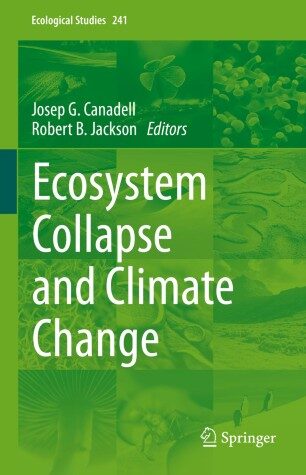
Human-driven greenhouse emissions are increasing the velocity of climate change and the frequency and intensity of climate extremes far above historical levels. These changes, along with other human-perturbations, are setting the conditions for more rapid and abrupt ecosystem dynamics and collapse. The book “Ecosystem Collapse and Climate Change” by Josep

Human-driven greenhouse emissions are increasing the velocity of climate change and the frequency and intensity of climate extremes far above historical levels. These changes, along with other human-perturbations, are setting the conditions for more rapid and abrupt ecosystem dynamics and collapse. The book “Ecosystem Collapse and Climate Change” by Josep G. Canadell from CSIRO Oceans and Atmosphere (Canberra, Australia) and Robert B. Jackson from Stanford University (Stanford, USA) presents new evidence on the rapid emergence of ecosystem collapse in response to the progression of anthropogenic climate change dynamics that are expected to intensify as the climate continues to warm. Discussing implications for biodiversity conservation, the chapters provide examples of such dynamics globally covering polar and boreal ecosystems, temperate and semi-arid ecosystems, as well as tropical and temperate coastal ecosystems.

Book Springer page here.

More publications

A harmonised dataset for Earth system foundation models

Foundation models for Earth systems have so far been trained primarily on physical climate and weather data, with limited representation of the human systems that both drive and respond to environmental change. The lack of a unified global training resource that combines climate, land, ocean, cryosphere, infrastructure, hazards, and socioeconomic