Beta
This website is in development — content and design are still changing
Announcement
IAMC 2021: Best Poster Awardees present their research
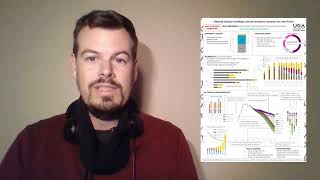
During the 14th IAMC Annual Meeting held between last 29 November and 3 December 2021, the Integrated Assessment Modeling Consortium granted Kimon KERAMIDAS (U Grenoble-Alpes) and Yang OU (PNNL) with the Best Poster Award. In these short videos the scientists explain the aim of their work presented at the Annual Meeting poster sessions. Materials industry
During the 14th IAMC Annual Meeting held between last 29 November and 3 December 2021, the Integrated Assessment Modeling Consortium granted Kimon KERAMIDAS (U Grenoble-Alpes) and Yang OU (PNNL) with the Best Poster Award.
In these short videos the scientists explain the aim of their work presented at the Annual Meeting poster sessions.
**Materials industry modelling in net-zero emissions scenarios: the case of steel and cement**
Kimon Keramidas, Silvana Mima, Adrien Bidaud (Université Grenoble-Alpes)
WORK IN PROGRESS – DO NOT CITE
The aim of this paper is to analyse the potentials and challenges faced by the materials sector in the effort towards a low-carbon economy, with a focus on steel and cement. We explicitly represent both the demand and production side of steel and cement in a global energy system model. We look at multiple drivers of steel and cement demand, including demand linked to low-carbon technologies; greening; options like clinker/cement ratio and material substitution in the construction sector; we represent materials production industrial processes allowing investment in more energy-efficient capacities, alternative fuels use and other options such as carbon capture and storage and use (CCS, CCU), as well as the role of recycling. This study presents on-going work using the POLES energy system model targeting a suitable reduction of steel- and cement-related greenhouse gas emissions.
The Road to Glasgow: Updates to climate pledges improve chances of limiting global climate change
Yang Ou (Joint Global Change Research Institute, Pacific Northwest National Laboratory)
In preparation for the 26th Conference of Parties, countries have submitted updated nationally determined contributions (NDCs) in 2021. Here we estimate probabilistic temperature outcomes in 2100 for five emissions scenarios with and without the updated NDCs, accounting for the improved climate science understanding, net-zero pledges, the impacts of COVID-19, current sectoral policies, and the latest technological trends in addition to the updated climate pledges. We find that compared with the 2015 NDCs, the updated pledges suggest strengthening ambition through 2030 and thus provide a stronger near-term foundation to deliver on the long-term Paris goals.
The IAMC is pleased to announce the composition of the Scientific Steering Committee (SSC) for the 2026–2029 term, following both the member election held in April 2026 and the at-large appointment process concluded on 1 July 2026. The institutions received the highest number of votes in the April
The IAMC is pleased to announce that the Scientific Steering Committee has formally established a new Scientific Working Group on Health and Human Wellbeing. With the growing importance of the health and climate interface in the international and national policy arena, there is a rising demand for robust, policy-relevant